Kids and Screens: Keeping Their Eyes Clear All Year
24 APR 2026
Children's eye health Eye conditions Eye health
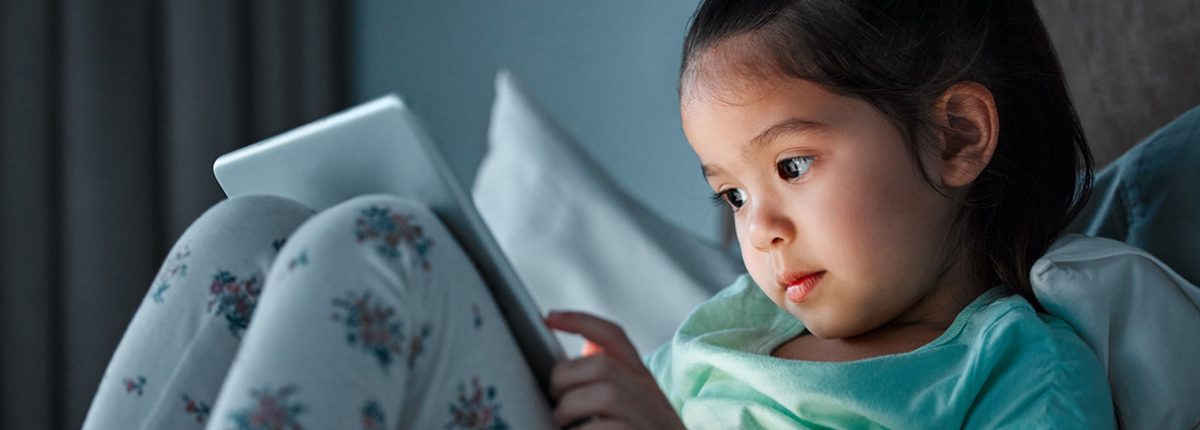
Did you know that Pew Research found that 31% of all kids under two years old start using electronic devices? Whether it’s a school laptop, a tablet at the dinner table or a phone tucked under the covers at bedtime, screen time is becoming more entrenched in modern childhood.
This is a fair question. Kids’ screen time and eye health are closely linked, and the connection is becoming more pronounced as shared or personal devices dedicated to children’s use become increasingly more normalised. Australian optometrists are seeing its effects in practice, ranging from irritated, dry eyes to more serious long-term concerns about vision development and myopia control in children.
The good news is that awareness goes a long way. With the right habits and regular eye checks, you can help protect your child’s vision through every school term and holiday break. Here’s what parents need to know.
What does screen time do to young eyes?
When children focus on a device for extended periods, the muscles inside the eye that control focusing work continuously without rest. Over time, this sustained effort leads to eye strain, fatigue and discomfort. It’s the visual equivalent of holding a heavy bag for hours; it’s manageable at first, but exhausting the longer it goes on.
Compounding this is a less obvious problem: children blink significantly less when using screens. Blinking keeps the eye’s surface lubricated, so a reduced blink rate means the tear film breaks down, leaving the eyes feeling dry, gritty, or irritated. Conditions like dry eye in children from screen use are more common than many parents realise, as kids accumulate more hours on devices.
According to a 2025 Macquarie University study, primary school students average approximately six hours of daily screen time, while secondary school students average around nine. This is vastly different to the Australian Government’s recommendation of no more than two hours of recreational screen time per day for children aged 5–17. The gap is striking, and the eyes are absorbing every minute of it.
Then there’s the question of blue light and children. Screens emit high-energy visible (HEV) blue light, to which children’s eyes are particularly vulnerable. Unlike adults, whose crystalline lens has developed more UV-filtering pigment over time, younger eyes allow significantly more blue light to reach the retina. While the effects aren’t fully understood yet, current evidence suggests prolonged blue light exposure may contribute to digital eye strain and disrupted sleep, particularly when screens are used in the hour before bed.
Myopia & children’s screen use: Why Australian kids are at risk
Of all the ways screens are affecting young eyes, the most significant is the rise of myopia, commonly known as short-sightedness.
Myopia occurs when the eye grows slightly too long from front to back. The result is that light focuses just in front of the retina rather than directly on it, making distant objects appear blurry while close-up vision remains clear. It’s a structural change to the eye that, once it develops, it doesn’t reverse.
The scale of the problem facing children’s eye health in Australia is striking. According to a 2026 report from Bupa Optical and Macquarie University, 27% of Australian children who had an eye test in 2025 were diagnosed with myopia. That’s more than one in four children, and it almost certainly undercounts the true picture, since many children with vision problems go untested. And it’s not only children, either. The Australian Government reports that 6.3 million Australians, or over 22% of the population, experience Myopia.
So what’s driving it? The relationship between myopia in children and screen use is increasingly well supported by research, though it’s just one piece of a larger picture. Prolonged near-focus activity, whether that’s reading, studying or staring at a device, places sustained demand on the eye’s focusing system. Over time, particularly in children whose eyes are still developing, this is believed to contribute to the elongation of the eyeball that characterises myopia.
Compounding this is the corresponding loss of outdoor time. Exposure to natural light plays a protective role in healthy eye development, and children who spend more time outside have consistently been shown to be at lower risk of developing myopia. When children swap outdoor play for screens, both risk factors move in the wrong direction at the same time.
It’s also worth understanding what’s at stake beyond the need for glasses. Mild myopia is manageable, but high myopia, where the prescription is significant, meaningfully increases the risk of serious eye conditions in later life, including retinal detachment, glaucoma and macular degeneration. This is why early detection and, where appropriate, early intervention are so important.
Signs your child’s eyes may be struggling
Many vision problems in children develop gradually and without obvious pain, which means they often go unnoticed, sometimes for years. Children frequently don’t report vision difficulties simply because they don’t realise anything is wrong; blurry or strained vision can feel entirely normal to them if it’s all they’ve ever known.
As a parent, knowing what to look for can make all the difference. Watch out for the following signs:
- Squinting at the TV or classroom board: Squinting is the eye’s way of trying to sharpen a blurry image. If your child regularly squints to see something in the distance, it’s worth investigating.
- Headaches after screen use: Persistent headaches, particularly around the forehead or behind the eyes, after time on a device, can signal that the visual system is working harder than it should.
- Frequent eye rubbing: While occasional rubbing is normal, children who rub their eyes regularly during or after screen use may be experiencing fatigue or irritation.
- Red, watery, or irritated eyes: These are among the most visible signs of dry eye in children from screen use that is often an overlooked consequence of prolonged device use and reduced blinking.
- Sitting closer to the TV/holding devices close to the face: This is a classic compensating behaviour in children with developing myopia, as it temporarily improves the clarity of a blurry image.
- Losing their place while reading, or avoiding it altogether: Difficulty tracking text on a page can point to underlying vision issues that have nothing to do with literacy.
- Complaints of double vision or tired eyes: These can indicate strain on the eye muscles that control focus and coordination, particularly after extended near work.
If your child shows one or more of these signs consistently, booking an eye test should be your first step. It’s important not to take a wait-and-see approach, as many developing eye conditions produce no noticeable symptoms at all until they’re well established.
Myopia control for children: What parents can do
Screens aren’t going away, and the goal here isn’t to eliminate them, it’s to build habits that protect your child’s eyes health. The good news is that small, consistent changes can make a meaningful difference, and most of them cost nothing.
1. Follow the 20-20-20 rule for kids
One of the simplest and most effective things you can do is introduce the 20-20-20 rule for kids: every 20 minutes of screen time, look at something 20 feet (about 6 metres) away for 20 seconds. It sounds almost too simple, but it works — the break resets the eye’s focusing muscle and encourages blinking, which helps restore the tear film. For younger children, tie it to natural break points like the end of a YouTube video, a game level, or an ad break to make it feel less like a rule and more like a habit. One of the simplest and most effective things you can do is introduce the 20-20-20 rule for kids: every 20 minutes of screen time, look at something 20 feet (about 6 metres) away for 20 seconds. It sounds almost too simple, but it works — the break resets the eye’s focusing muscle and encourages blinking, which helps restore the tear film. For younger children, tie it to natural break points like the end of a YouTube video, a game level, or an ad break to make it feel less like a rule and more like a habit.
2. Get them outside
Research consistently shows that children who spend more time outdoors are at lower risk of developing myopia. Aim for at least one to two hours of outdoor time per day. It doesn’t need to be a structured activity either, just time spent in natural light, allowing them to run around, engage in imaginative play and enjoy a more balanced lifestyle.
3. Check their screen distance and posture
Devices should be held at roughly arm’s length, with screens positioned at or just below eye level. Children who hold phones very close to their face are placing significantly more demand on the eye’s focusing system and increasing the likelihood of developing myopia.
4. Dim the screens before bed
Blue light from screens can interfere with melatonin production, the hormone that tells the brain it’s time to sleep. Limiting screen use in the hour before bed, switching devices to night mode, and adjusting screen settings to use more sepia tones in the evening, can help protect both sleep quality and eye comfort. Well-rested eyes are better equipped to handle the visual demands of the following day.
5. Mind the lighting
Screens used in dark rooms force the eyes to work harder to manage the contrast between the bright screen and the surrounding environment. Encourage your child to use devices in well-lit spaces and to avoid screens in bed with the lights off.
When good habits aren’t enough: Treating myopia in children
For some, balancing time outdoors with your kids’ screen time for eye health is enough to reduce their risk. But for others, particularly those who have a family history of vision issues, good habits alone may not be sufficient. This is where clinical intervention becomes important.
Myopia control for children is a specialised area of optometry focused not just on correcting blurry vision with glasses or contact lenses, but on actively slowing the rate at which it worsens over time.
A standard pair of glasses will help your child see clearly, but it won’t do anything to slow the underlying progression of the condition. Myopia control treatments work differently, they address the mechanisms driving eye elongation, helping to preserve long-term eye health alongside clear vision today.
At Eyecare Plus practices, optometrists can discuss a range of evidence-based myopia control options for kids, tailored to their age, prescription and lifestyle. These include:
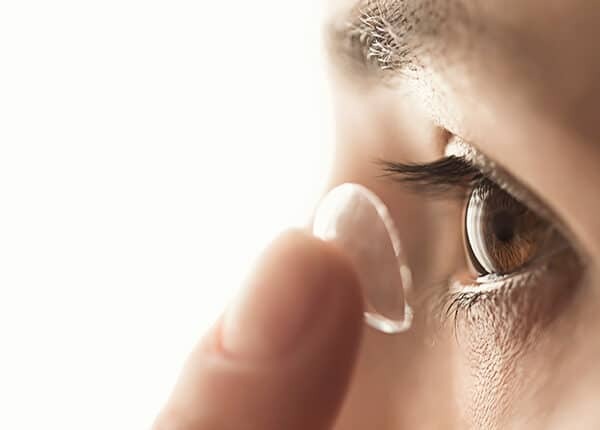
- Orthokeratology (Ortho-K): Specially designed rigid contact lenses worn overnight that gently reshape the cornea while your child sleeps, providing clear vision during the day without glasses or contacts — and helping to slow myopia progression at the same time.
- MiYOSMART lenses: Spectacle lenses developed specifically for myopia control, using Defocus Incorporated Multiple Segments (D.I.M.S.) technology to correct vision while reducing the stimulus for the eye to continue elongating. A practical, non-invasive option suitable for children of most ages.
- Multifocal and specially designed contact lenses: Soft contact lenses engineered to manage the peripheral focus of light entering the eye, which is a key driver of myopic progression in children.
- Atropine therapy: Low-dose atropine eye drops have been shown in clinical trials to significantly slow myopia progression. Used nightly, they are one of the most researched myopia control interventions currently available.
Many of these options are suitable for children, to which your optometrist will recommend the most appropriate treatment plan. In any case, the earlier testing and intervention begins, the greater the potential to reduce the long-term severity of myopia.
How often should children have their eyes tested?
When children’s eye examinations are the key to getting ahead of potential vision issues, they should happen more often than most people think.
Children should ideally have their first comprehensive eye test before starting school, around the age of four or five. Vision problems that go undetected at this stage can affect learning, concentration and development in ways that are often mistaken for other issues entirely. Beyond that, annual tests are recommended throughout primary and secondary school to catch issues before they become larger problems. Ultimately, you should approach your child’s eye care the same way you would a dental or general health check-up.
If you or your partner wear glasses, your child is at higher risk of developing myopia, and more frequent monitoring may be recommended by your optometrist. Similarly, if your child has already been diagnosed with myopia, regular check-ups are essential to track how quickly their prescription is changing and whether a myopia control program should be considered or adjusted.
The Eyecare Plus Checkup Plus™ examination is designed with exactly this in mind. Taking 30 to 45 minutes, it goes well beyond a standard vision check; testing not just how clearly your child can see, but the health of their eyes, how they focus, how they work together, and whether there are any early signs of conditions that warrant closer monitoring.
See the bigger picture with Eyecare Plus
It’s unlikely your children will stop using digital devices and they don’t need to. But the habits they maintain can help minimise the chance and impact of dry eye and myopia children’s screens have on them, shaping the quality of their vision for your kids’ vision for a long time to come.
If it’s been more than a year since your child’s last eye test, or if they’ve never had one, now is a good time to change that.
Book your child’s eye test at your local Eyecare Plus practice today and give your child a clearer path forward. The OptometristThey can be instrumental to working with the best suited treatments, and recommending other strategies to manage your family’s vision care.
Book an appointment with
your local Eyecare Plus
Optometrist today.


 Return to Stories