Your Eyes vs. the Australian Summer: How to Prevent Damage From UV Exposure

We all know the drill: slip, slop, slap. Australians are world-class at protecting their skin from the sun; after all, we have one of the highest UV indexes on the planet. But while we’re diligent about SPF and hats, there’s one crucial area most of us overlook: our eyes.

Your eyes are incredibly vulnerable to UV damage, yet only a fraction of Australians wear proper eye protection when outdoors. Unlike sunburn, which often leaves painful effects hours after exposure, sun damage to the eyes accumulates silently over the years. That’s the danger, you won’t feel your eyes “burning,” but its cumulative effects can lead to serious, irreversible conditions like cataracts, macular degeneration, and pterygium.

This summer, it’s time to give your eyes the same protection you give your skin. Let’s explore how the sun affects your vision and what you can do to safeguard your eye health for the long term.

How UV rays damage your eyes

Ultraviolet (UV) radiation doesn’t just affect your skin; it penetrates the delicate structures of your eyes, causing damage to the cornea, lens, and retina. There are three types of UV rays: UVA, UVB, and UVC. While the ozone layer filters out UVC, both UVA and UVB rays reach the earth’s surface and pose significant risks to your eyes.

Short-term effects can appear within hours of exposure:

  • Photokeratitis: sunburn of the cornea, which may cause pain, redness, tearing, and temporary vision loss
  • Increased light sensitivity and discomfort
  • Inflammation and irritation

Long-term effects develop gradually over years of unprotected exposure:

  • Pterygium: often called “surfer’s eye’ is a fleshy growth on the white of the eye
  • Cataracts: clouding of the eye’s natural lens, the leading cause of blindness worldwide
  • Macular degeneration: damage to the retina, causing permanent vision loss
  • Skin cancer: on the eyelids and surrounding areas

Aussie sunny days call for outdoor sports, gardening, weekend BBQs and arvos at the beach. It also means we’re exposed to far more UV radiation than others. That’s why UV eye protection in Australia isn’t just recommended; it’s essential.

Common signs of UV eye damage

One of the trickiest aspects of sunburned eyes is that symptoms often don’t appear immediately. You might spend a full day at the beach or on the water, only to experience discomfort that evening or the next morning. Watch for these warning signs:

  • Eye pain or a gritty sensation
  • Redness and excessive tearing
  • Blurred or hazy vision
  • Increased sensitivity to light
  • Swelling around the eyes
  • Temporary vision loss or “halos” around lights

Many people mistake these symptoms for fatigue, allergies, or dry eye. However, if they occur after prolonged sun exposure, UV damage is likely the culprit. While mild photokeratitis typically resolves within 48 hours, repeated episodes contribute to cumulative damage that can’t be undone.

If you experience persistent symptoms, it’s crucial to book an eye examination with Eyecare Plus to assess your vision concerns before they become larger issues.

How to protect your eyes this summer

The good news? Preventing UV eye damage is straightforward when you know what to look for. Here are the essential summer eye health tips to keep your vision safe:

1. Choose quality sunglasses with UV400 protection

Not all sunglasses are created equal. Dark lenses without proper UV protection can actually do more harm than good; they not only give you a false sense of security but can cause your pupils to dilate, allowing more UV rays to enter your eyes.

Look for sunglasses with UV400 protection. They’re rated — by Australian standard AS/NZS 1067:2016 — to block 99% to 100% of both UV rays up to 400 nanometres. Wraparound frames offer extra coverage around the sides of your face to help block UV rays that reflect off surfaces like water, sand and pavement.

2. Wear a wide-brimmed hat

Sunglasses alone aren’t enough. A wide-brimmed hat (at least 7.5cm brim) provides additional shade and blocks UV rays from above. Together, a hat and quality sunglasses can  educe UV exposure to your eyes by up to 98%.

3. Seek shade during peak UV hours

UV radiation is strongest between 10 a.m. and 4 p.m. Whenever possible, plan outdoor activities outside these hours or stay in shaded areas. Remember, UV rays can penetrate clouds, so protection is necessary even on overcast days.

If you’re unsure whether you need sun protection, check the  reau of Meteorology’s UV index forecast. Anything above a ‘3’ requires sunglasses, a hat, and sunscreen at a minimum, and long-sleeve tops and trousers for higher ratings.

4. Consider polarised lenses for glare reduction

If you often spend time near water, in snow, or behind the wheel, polarised lenses can be a huge help. While polarisation doesn’t provide extra UV protection, it significantly reduces glare by filtering horizontal light waves. This makes them ideal for fishing, boating, and beach activities where reflected light can be intense.

5. UV-blocking contact lenses

Many contact lenses now come with built-in UV protection. While they don’t replace sunglasses — they only cover the cornea and lens, leaving the surrounding areas exposed — they provide an additional layer of defence. Ask your optometrist about UV-blocking options at your next fitting.

6. Schedule annual eye examinations

Regular check-ups allow your optometrist to detect early signs of UV damage before it affects your vision. At Eyecare Plus, our comprehensive Checkup Plus™ examinations include assessments for pterygium, cataracts, and other UV-related conditions. Early detection means early intervention, protecting your sight for years to come.

Stay on top of Pterygium — ‘Surfer’s Eye’

If you live near the coast or spend significant time outdoors, you’ve likely heard of pterygium or “surfer’s eye.” This condition involves a fleshy, triangular growth that extends from the white part of the eye (conjunctiva) onto the cornea. While benign, it can cause redness, irritation, and in severe cases, vision impairment.

Pterygium prevention centres on minimising UV exposure and protecting your eyes from wind, dust, and glare. Australia’s combination of high UV index, coastal winds, and outdoor lifestyle makes pterygium particularly prevalent here.

Early-stage pterygium can be managed with lubricating eye drops and continued UV protection. However, if it grows large enough to affect vision or cause persistent discomfort, surgical removal may be recommended. Your Eyecare Plus optometrist can monitor pterygium growth during regular examinations and provide tailored advice on management and prevention.

Why regular eye checks matter

Many severe eye conditions develop without obvious symptoms in their early stages. By the time you notice vision changes, significant damage may have already occurred. This is especially true for UV-related conditions like cataracts and macular degeneration.

Australian summer eye care isn’t just about wearing sunglasses; it’s about proactive monitoring and prevention. Regular eye examinations allow your optometrist to:

  • Identify early signs of UV damage before symptoms appear
  • Recommend appropriate protective eyewear based on your lifestyle
  • Monitor existing conditions like pterygium or early cataracts
  • Provide personalised advice on protecting eyes from UV damage

At Eyecare Plus, we take a thorough, preventative approach to eye health. Our 30-45 minute Checkup Plus™ examinations go beyond basic vision testing to assess your overall eye health and detect potential issues early. With 120+ practices across Australia, you’ll find expert, locally owned optometry care wherever you are.

Enjoy the sun, protect your vision

The Australian summer is meant to be enjoyed, but it doesn’t mean you need to risk your vision in the process. With the right protective measures, you can safeguard your eyes from UV damage while still making the most of the weather.

This summer, make eye protection a non-negotiable part of your sun safety routine. Invest in quality sunglasses, wear a wide-brimmed hat, seek shade during peak hours, and book your annual eye examination. Your future self will thank you.

Ready to prioritise your eye health? Visit your nearest Eyecare Plus optometrist for expert advice on the best sunglasses for your lifestyle and personalised UV protection strategies. Because protecting your vision today means clearer, healthier sight for years to come.

Managing Spring Allergies: Comprehensive Eye Care Strategies

Spring in Australia is truly spectacular. Jacarandas paint our streets purple, wattle bursts into golden bloom, and parks come alive with vibrant colour. But for millions of Australians, it also means dealing with spring eye allergies that turn time outdoors into an itchy, watery ordeal.

If you’ve ever found yourself rubbing your eyes constantly, dealing with persistent redness, or struggling to enjoy a picnic because your eyes won’t stop streaming, you’re not alone. Research suggests that approximately one in five Australians experiences allergic rhinitis, with many also suffering from associated eye symptoms. The good news? With the right strategies and professional guidance, you can protect your eyes and fully embrace the season.

Here’s how you can manage a range of eye allergies in Australia and beat the effects of pollen and eye discomfort so you can spend more time in the great outdoors with calmer, clearer vision.

What causes spring eye allergies?

When your eyes come into contact with airborne allergens like pollen, your immune system can overreact, releasing histamines that trigger inflammation. This condition, medically known as allergic conjunctivitis, causes the characteristic symptoms many Australians dread each spring.

Seasonal allergic conjunctivitis specifically refers to eye allergies that occur during particular times of the year, as you guessed it, primarily in spring and early summer. Unlike year-round allergies triggered by dust mites or pet dander, seasonal varieties are directly linked to outdoor allergens that peak during the warmer months.

Whenever you’re experiencing an episode of inflammation and conjunctivitis, your eye care is important, regardless of how accustomed you may become. When pollen grains land on the surface of your eyes, your immune system identifies them as threats, and inflammatory chemicals are released. This causes the blood vessels in your conjunctiva (the clear membrane covering the white area of the eye) to swell, resulting in red, itchy, watery eyes.

Why every hay fever season feels worse than the last

Australia’s diverse climate and vegetation create a perfect storm for allergy sufferers. Finding treatment to relieve itchy, watery eyes in Spring is like clockwork as wattle, ryegrass, plane trees, pellitory weeds and cypress trees start releasing their pollen.

Even worse, Melbourne and Sydney consistently record some of Australia’s highest pollen counts and experience the phenomenon of “thunderstorm asthma”. This happens when storms break pollen grains into smaller particles that penetrate deeper into the airways and eyes, worsening symptoms.

Recognising symptoms: Is it allergies or something else?

Understanding your symptoms is the first step toward effective relief. Here’s what to look out for:

  • Intense itching: Often the most bothersome symptom, affecting one or both eyes
  • Redness: Blood vessels become dilated and visible
  • Watery discharge: Clear, thin tears that won’t stop flowing
  • Swollen eyelids: Puffiness that can make eyes appear smaller
  • Burning sensation: Feels like something is irritating the eye surface
  • Stringy mucus: Particularly noticeable upon waking
  • Light sensitivity: Bright conditions become uncomfortable
  • Gritty feeling: As though sand or an eyelash is stuck in your eye

When it’s more than just allergies

While seasonal eye allergies are common, it’s crucial to recognise when symptoms might indicate something more serious. Carefully observe your symptoms to decide when to see an eye care professional. Some symptoms that may raise a red flag include:

  • Vision changes: Blurriness, halos, or reduced clarity
  • Severe pain: Allergies cause discomfort, but sharp pain suggests infection or injury
  • Thick, coloured discharge: Yellow or green discharge indicates bacterial infection
  • Light sensitivity that worsens: Could indicate corneal involvement
  • No improvement after 48 hours of treatment: Persistent symptoms need professional assessment
  • Contact lens intolerance: Sudden inability to wear lenses comfortably

Eyecare Plus optometrists can quickly differentiate between simple seasonal allergic conjunctivitis and conditions requiring different treatment approaches, such as bacterial conjunctivitis, dry eye disease, or corneal abrasions.

Prevention strategies to stop allergies before they start

The most effective approach to managing hay fever and other vision health events combines prevention with treatment. By reducing your exposure to pollen, your eye symptoms and general comfort levels can start to feel more manageable.

  • Wear wraparound sunglasses: Opt for styles that offer side protection, creating a physical barrier between your eyes and airborne pollen.
  • Check daily pollen forecasts: The  Australian Pollen Information Network provides daily pollen counts for major cities. Plan outdoor activities for days when counts are lowest, typically after rain when pollen has been washed from the air.
  • Time your outdoor activities wisely: Pollen levels peak during mid-morning (10am-3pm) on warm, dry, windy days. If possible, schedule outdoor exercise or gardening for early morning or late afternoons when counts are lower.
  • Shower and change clothes after being outside: Pollen clings to hair, skin, and fabric. A quick rinse removes these allergens before they transfer to your pillow or continue irritating your eyes.
  • Keep car windows closed: Use air conditioning with recirculation mode instead. Car cabin filters should be replaced regularly to maintain effectiveness.

How to reduce indoor allergens on your eyes

  • Invest in HEPA air purifiers: High-Efficiency Particulate Air filters capture pollen particles as small as 0.3 microns. Place one in your bedroom for overnight relief.
  • Keep windows closed on high-pollen days: While fresh air is tempting during beautiful spring weather, closed windows prevent pollen from infiltrating your home. Opt to ventilate your home with air conditioning instead.
  • Wash bedding weekly in hot water: Your pillowcase collects pollen from your hair throughout the night. Hot water (at least 60°C) effectively kills dust mites and removes many allergen sources.
  • Vacuum with HEPA filters: Standard vacuums can actually redistribute allergens into the air. HEPA-equipped vacuums trap particles rather than dispersing them.
  • Regular air conditioning maintenance: Have filters professionally cleaned before spring begins. Dirty AC filters may circulate accumulated pollen throughout your home.
  • Remove your shoes at the door: This prevents the tracking of allergens through your living spaces.

Eye allergy treatments in Australia

While cold compresses can provide some instant relief, it is usually temporary. For longer-lasting relief, it’s important to consult your Eyecare Plus optometrist, who can recommend a course of treatments that help prevent symptoms as much as manage them. They may recommend:

  1. Prescription antihistamine drops: More potent than over-the-counter versions, medicated eye drops for allergy relief are among the most common methods for alleviating discomfort.
  2. Artificial tears: Lubricating drops dilute and flush away allergens from your eye surface. Look for preservative-free options if you need to apply them more than four times daily; otherwise, if you feel you’re overly reliant on artificial tears, your optometrist may advise a more suitable course of action.
  3. Mast cell stabilisers: These prevent allergic reactions by stopping histamine release before it starts. They’re most effective when started before allergy season begins and used consistently throughout spring.
  4. Corticosteroid eye drops: Reserved for severe cases due to potential side effects, these powerful anti-inflammatory drops offer relief when other treatments fail. They require careful monitoring by your optometrist.
  5. Oral antihistamines: Some over-the-counter medications can treat allergy symptoms throughout your body, including your eyes. However, be aware that they can sometimes cause eye dryness as a side effect.

What your optometrist can do

During a Checkup Plus™ examination, Eyecare Plus optometrists spend 30-45 minutes thoroughly evaluating your eye health. We don’t just address current symptoms — we identify underlying factors that might be contributing to your allergies and check for complications.

Every patient is different. Your optometrist considers your symptoms, lifestyle, eye wear, other health conditions, and medication sensitivities to create a customised approach. While every hay fever season is unique, we monitor your response to treatment and adjust your plan as needed throughout spring.

What does allergy season mean for contact lens wearers?

As contact lenses are worn directly on the eyes, pollen and other seasonal irritants can pose a number of challenges. These are usually caused by pollen landing and sticking on your contacts, eye drops causing your contact lenses to discolour and become cloudy, or the increased production of tears, which allows pollen to collect and stick to your contact lens, causing it to become cloudy. You may also feel tender due to redness, swelling, and inflammation caused by allergens, which can make your contacts feel less comfortable.

To get around this, you should:

  • Use allergy-safe contact lenses
  • Use daily disposable contact lenses
  • Change extended-use contact lenses more frequently

However, there are some occasions where glasses are more ideal if contacts are too uncomfortable to wear, such as:

  • High pollen count days
  • When symptoms exist
  • During activities like gardening that increase your exposure

When to seek professional help

While many people successfully manage mild spring eye allergies with over-the-counter products, certain situations require professional assessment. Book an appointment with an Eyecare Plus professional if you experience:

  • Persistent symptoms
  • Vision changes
  • Severe pain
  • Unilateral symptoms
  • Thick, coloured discharge
  • Light sensitivity that worsens
  • Symptoms that interfere with daily life
  • Previous eye surgery or conditions

Take control of your eye health this spring

Spring in Australia is too beautiful to miss because of allergies. With the right combination of preventive strategies, targeted treatments, and professional guidance, you can enjoy the season while maintaining healthy eyes and comfortable vision.

Remember, spring eye allergies don’t have to be inevitable or unbearable. Whether you need advice on preventing pollen eye irritation, want to explore prescription options to relieve itchy, watery eyes, or recommendations for allergy-safe contact lenses, Eyecare Plus is here to help.

Our locally owned practices across Australia offer clinical expertise and personalised care to ensure you can get on with your day with ease. Don’t miss out on another irritation free spring — book a consultation today at your closest location.


Do You Actually Know What Your Health Fund Covers for Eyewear?

Every year, millions of Australians pay for private health insurance but fail to take full advantage of their health fund’s optical cover. Why? Because many don’t realise that their entitlements to prescription glasses, contact lenses, or sunglasses reset annually.

If you don’t use them, they disappear — this is the catch with use it or lose it health insurance. Look away and it’s gone. Think about it: you’re already paying monthly premiums for a policy that promises value through optical benefits. Yet without making a claim, that money goes straight back to the insurer scot-free.

Depending on your health cover you could miss out on $150–$250 (or more) in rebates each year. That money could otherwise be used to replace your existing frames, add UV-protecting sunglasses to your eyewear wardrobe, or add contact lenses to your eyewear solutions.

And with end-of-year deadlines fast approaching, there’s never been a better time to check your policy and book an appointment at Eyecare Plus. After all, you wouldn’t leave money lying around? This is no different.

Follow on and we’ll show you how to take advantage of the generous eyewear rebate in Australia that many funds provide with their optical cover.

What do most health funds cover for glasses

When it comes to optical cover, most private health insurers include eyewear under their “extras” policies. What you can claim varies widely between companies and even among individual plans. Here’s what’s often included:

  • Prescription glasses: Most policies allow claims on standard single-vision glasses, bifocals, multifocals, or progressive lenses.
  • Prescription sunglasses: Many funds now include rebates for prescription sunnies, giving you vision correction with the bonus of UV protection. This can be a smart way to use your private optical cover if you don’t need a second pair of standard specs.
  • Contact lenses: Disposable, monthly, or even specialty lenses such as multifocal or astigmatism-correcting contacts are often included. Some policies also allow orthokeratology (Ortho-K) lenses used for myopia control.
  • Lens upgrades: You may be able to claim for coatings or enhancements such as anti-glare, scratch-resistant, blue-light filters, or thinner high-index lenses.
  • Safety glasses: Certain health funds also cover prescription safety eyewear, a huge advantage for people working in trades, laboratories, or industrial environments.
  • Eye tests: Most standard eye exams are bulk billed under Medicare. However, your extras policy may cover advanced diagnostic scans (like OCT imaging) or children’s vision assessments if they fall outside Medicare.

How the annual limit of private health extras for glasses works

Most policies set a capped claimable amount for eyewear each benefit year. This typically ranges from $150 to $250 per person on mid-range extras policies, with some premium policies offering hundreds more. For example:

  • A $200 annual optical limit could cover a standard pair of prescription glasses.
  • You’ll pay the gap if your frames and lenses cost more.
  • Families often have separate limits for each member, meaning multiple rebates can be claimed in the same year.

One of the biggest traps in health insurance and optometry is that unused allowances usually don’t roll over. If you don’t claim before the reset date, your balance disappears — meaning you’ve effectively paid for cover without getting anything from it. It’s why it’s known as use it or lose it health insurance.

Why you may be missing out

Optical extras do not roll over from one year to the next, making it easy for Australians to lose out on hundreds of dollars they’re entitled to. So, why does this happen so often? And, what can you do?

1. Not realising what’s included

A surprising number of people don’t fully understand what’s included in their private health fund’s optical extras. They may assume it only applies to basic prescription specs, when many insurers also cover contact lenses, prescription sunglasses, or even specialty lens upgrades.

If you’re unsure, talk to your local Eyecare Plus Optometrist. They can help you identify what’s available, so your optical benefits go further.

2. Waiting until something breaks

It’s common to think, “I don’t need new glasses yet, so I won’t claim this year.” But your private health extras for glasses can usually be used for more than one item. If your everyday pair is fine, you could claim a spare pair, upgrade to prescription sunnies, or invest in blue-light–filtering lenses.

Stop being too shy to use your entire benefit each year. Your premiums will not increase, and your insurer likely won’t give you a discount either. Don’t hesitate to start claiming today!

3. Overlooking the fine print

Every health fund has different rules. Some allow you to claim across multiple items or family members, while others apply your optical benefits to just one yearly purchase.

Don’t hesitate to review your coverage with your private health insurer to confirm, or let Eyecare Plus Optometrists identify how many people your plan applies to in your family.

4. Forgetting the reset deadline

Most policies reset on the 31st of December, though some renew at the start of a new financial year. Miss that deadline, and your rebate disappears. It’s why too many people only remember in December, leading to a rush of last-minute appointments.

Set a calendar alert on your phone earlier in the year to remind you to visit your closest Eyecare Plus location to update your glasses prescription. Why wait? Look at your frames now and inspect their condition. Could they use a refresh?

5. Skipping routine check-ups

Some patients only book an eye exam when they notice changes in their vision. However, regular check-ups are essential for detecting the early signs of eye disease.

Don’t compromise on your vision. Schedule an eye exam today to detect eye issues early and update your prescription so you can use your benefits more effectively.

6. Using your allowance on other extras

Some insurers count other extras, such as remedial massage and natural therapies, towards your allowance.

It’s important to compare the cost of all activities to ensure you use your entitlements strategically and get the biggest bang for your buck.

Book with Eyecare Plus to maximise your health fund optical cover

At Eyecare Plus, we understand that it’s not always clear what you can and can’t claim when policies vary between insurers, and the fine print often makes things more confusing than helpful.

To ensure you get the most from your eyewear rebate in Australia, our team will investigate all opportunities to use up your allowance before it resets and help you find eyewear that matches your vision needs, lifestyle and budget.

What are you waiting for? Book a consultation today to use up your optical benefits and leave with an updated prescription, new frames, a second pair of sunglasses or a supply of contact lenses without any fuss.

Should Your Child Switch to Contact Lenses? Pros, Cons and When It’s Safe

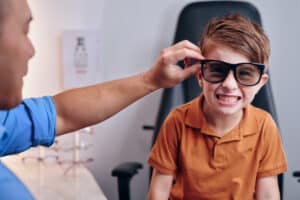
“Oi, you, four eyes.” Does that sound familiar from your schoolyard days? As children become more active and self-aware, many ask to switch from glasses to contact lenses, especially if they’ve received unkind nicknames. For parents eager to protect their youngsters from playground teasing, it raises an important and often complex question: are contact lenses safe for children, and if so, when is the right time to consider them?

Whether for sport, self-confidence, or practicality, contact lenses for kids are more accessible than ever thanks to technological advances and easier application methods. But choosing the right moment to trade in their frames isn’t simply about their age — they and you will need to balance their maturity, lifestyle, and willingness to care for their lenses responsibly to manage your children’s eye health.

While the idea might feel like a big step into big kid territory, many families find the transition smoother than expected, especially with the guidance from your local Eyecare Plus optometrist. Let’s discuss the potential benefits and challenges, and determine whether contacts are the right choice for your child’s vision and lifestyle.

What motivates kids to switch from glasses to contacts

For many adolescents, wearing glasses becomes a routine part of life. However, it can also be a difficult adjustment for many, particularly as they grow older. It might explain why they frequently and supposedly forget them at home. The reasons are often a mix of practicality and personal preference, which can range from:

  • Confidence and self-image: Some children feel more confident without glasses, particularly during social events, photos, public speaking or school.
  • Sports and physical activity: Glasses can slip, fog up, or break, making it harder for them to participate in their favourite games or sports. Contact lenses for kids offer clearer peripheral vision and stay in place, making them ideal for active lifestyles.
  • Discomfort or inconvenience: Kids may find glasses uncomfortable on their nose or ears, especially when worn all day at school.
  • A sense of maturity: Managing their own vision care can give children a sense of responsibility and independence.
  • Curiosity or peer influence: Some simply want to try lenses because friends wear them, or they’ve heard about others making the switch.

Pros and cons of contact lenses for kids

Deciding when is the best age for kids to wear contacts involves weighing the benefits and the challenges for your child’s maturity level and general attitude. While many adapt well and enjoy the freedom they provide, they do come with responsibilities that not every child may be ready for. Here’s what you’ll need to consider.

Pros:

  1. Improved vision for active lifestyles: Contact lenses provide stable, unobstructed vision during play and sport rather and won’t bounce around their face, slip or fog.
  2. Boosted self-esteem: Children who are self-conscious about wearing glasses may feel more confident and comfortable wearing contact lenses in everyday life or social and school settings.
  3. Better peripheral vision: Contact lenses, unlike glasses, cover the entire eye surface and are not impacted by distortions that may occur wearing glasses.
  4. Avoiding lost or broken frames: Parents know the challenge of keeping glasses intact, in their possession and making sure they get worn.
  5. Support for myopia: Special myopia control contact lenses can slow the progression of short-sightedness, offering both vision correction and long-term health benefits.

Cons:

  1. Requires consistent hygiene: Contact lenses must be cleaned and handled correctly to avoid eye infections. You’ll need to supervise their application until they can be trusted to apply them consistently and independently. Daily disposable contact lenses are a good option to consider as they don’t require cleaning.
  2. Not suitable for every child: Your child’s maturity, lifestyle, and ability to follow instructions are crucial in determining whether they’re ready to wear them regularly.
  3. Initial learning curve: Inserting and removing lenses can take time and patience. Some children may initially struggle with touching their eyes.
  4. Ongoing costs: While contact lenses are very affordable, they need frequent and ongoing replacement. Additionally, specialty lenses, like those for myopia control, may cost more, particularly if lenses are frequently lost or damaged.

What’s the best age for kids to wear contacts?

There is no fixed age when your optometrist will prescribe your children their first contact lenses. Their suitability has less to do with how many candles are on their most recent birthday cake. It’s about their maturity, motivation, hygiene habits, and ability to manage their vision care independently.

While it is more common for children to wear contact lenses from the ages of 10 and 11, some may not be ready until their early to mid-teens. Others might adapt easily at a much younger age, particularly with Mum and Dad’s assistance

Are contacts safe for children?

Contact lenses are safe for all age groups, provided they are worn responsibly and are appropriate for your youngster. During your kids’ eye exam, your Eyecare Plus optometrist will review your child’s vision needs and ask about your child’s maturity. Key signs your child may be ready include:

  • They follow instructions well and have a good sense of personal hygiene
  • They’re motivated to wear lenses and understand how to use them properly
  • They can commit to a routine of lens care, insertion and removal
  • They’ve expressed frustration or discomfort with their glasses in everyday life
  • Their myopia is increasing rapidly and they will benefit from the myopia control contact lenses to slow down this progression

When these behaviours are in place, the conversation shifts from “Should they?” to “How can we help them succeed?” That’s when it’s time to schedule an eye exam for kids and speak with your optometrist about whether contact lenses are their preferred vision care.

Contact lenses are one part of your children’s eye health plan

When arranging your child’s first pair of contact lenses, working closely with professional optometrists, such as those at Eyecare Plus, ensures any eye health plan aligns with your child’s current health and evolving visual needs. Our comprehensive eye assessment goes beyond a simple vision check — it offers a complete picture of your child’s ocular health, visual development, and readiness for contact lens use. During your consultation, the optometrist will:

  • Assess the shape and health of the cornea to ensure it can safely support contacts.
  • Measure tear film quality to determine whether the eyes can stay properly hydrated.
  • Review lifestyle habits, including school routines, screen time, and physical activity, to recommend the best lens type.
  • Discuss personal hygiene and maturity to gauge whether your child will likely manage contact lens care independently.
  • Identify whether monthly or daily disposables are the best contact lenses for kids.
  • Demonstrate proper application and removal techniques.

It’s also worth noting that contacts help manage broader kids’ eye health issues. For example, children with progressive short-sightedness may benefit from myopia control contact lenses, designed to correct vision and help slow its deterioration.

Equally important are follow-up visits. These check-ins allow the optometrist to monitor their fit, comfort, and visual clarity, addressing early signs of irritation, misuse, or eye health changes.

Restore vision and confidence with Eyecare Plus

While not every child may be ready right away, many can safely make the transition with the right support, guidance, and lens choice. From self-esteem boosts and sports-friendly wear to the clinical benefits of myopia control contact lenses, today’s lens options are more advanced and accessible. But every child’s eyes are different, that’s why expert, personalised ocular advice matters.

Our experienced optometrists understand what it takes to ensure a safe and successful wear. Whether it’s your child’s first contact lenses or it’s time for an updated fit, we provide expert care that supports them from their very first pair to every one after. Book an eye test today at your local Eyecare Plus clinic and give your child the support they need to see clearly and live confidently.

Can Multifocal Lenses Help with Digital Eye Strain?

Whether checking emails, working on spreadsheets, or scrolling through social media feeds while simultaneously streaming movies, Australians spend more time than ever in front of screens. While this digital shift has brought more conveniences and opportunities for entertainment, it has also introduced a silent, persistent strain on our eyes.

Blurred vision, dry eyes, and headaches are no longer rare complaints, but are becoming more common the longer you keep your eyes fixed on backlit screens. This condition, commonly referred to as digital eye strain, or clinically as computer vision syndrome, is becoming more pronounced every year and with people of all ages.

But what if your eyewear could do more than simply correct your vision? What if the right pair of glasses could make screen time more comfortable? Multifocal lenses, especially modern progressive lenses, are now being looked at not just for reading or distance, but as a way to ease digital eye fatigue. Could they be part of the solution? Let’s take a closer look.

What is digital eye strain?

It is a group of symptoms that occur after extended, and more often, uninterrupted use of digital screens. While anyone can experience it, it’s especially common among people who spend more than two hours a day on computers, tablets or smartphones, which, for most of us, is every day. These symptoms may include:

  • Blurred or fluctuating vision
  • Dry, irritated, or watery eyes
  • Headaches, especially after screen use
  • Eye fatigue or heaviness in the eyelids
  • Double vision during or after device use
  • Increased light sensitivity
  • Difficulty refocusing between distances
  • Neck, shoulder, or back pain related to poor posture
  • Trouble concentrating after extended screen time

Computer vision syndrome isn’t just the result of focusing our eyes on screens — we tend to blink less, which dries out our eyes. Fonts on digital displays often lack the sharp contrast of ink on paper, while glare and poor lighting can also make eyes feel more fatigued. Not to mention that our eyes constantly have to refocus, especially if we shift between multiple screens or glance from a device to distant objects and back again.

Over time, this repetitive strain can lead to visual discomfort and fatigue. Understanding this is the first step toward exploring how to reduce eye strain from screens, and why certain optical solutions like using multifocal lenses for computer use may offer relief.

Why digital eye strain is a focusing problem

To understand why our eyes get tired from screen time, it helps to look at something called visual accommodation, basically, how our eyes adjust their focal range between things that are close, mid-range, and far away. The eye’s lens sits behind the iris and the ciliary muscle surrounding the lens changes it’s shape when focusing on different distances. These ciliary muscles  are constantly working whenever you read a book, check your phone, or glance from your laptop to something across the room. That back-and-forth takes effort, and over time, it can really wear your eyes out, ouch!

The real problem arises when this system is overworked. Digital devices are typically viewed at intermediate distances, not quite close like a book, and not as far as a television. Holding this focal range for extended periods can fatigue the eye muscles, particularly if your lenses or screen setup doesn’t already provide adequate support.

The more your eyes are forced to work without a visual break, the more stress they absorb. And if you already need vision correction, this strain compounds over time. This is where specially designed progressive lenses come in, they offer targeted support for intermediate vision zones.

How multifocal lenses help digital eye strain

Many people are familiar with reading glasses or single‑vision lenses, which correct for one distance, either near or far. However, they can fall short when visual demands span multiple zones. This is where glasses for digital devices come into play.

  • Multifocal lenses are designed to accommodate multiple prescriptions within a single lens, allowing the wearer to see clearly at varying distances. Earlier versions such as bifocals or trifocals typically have visible lines that separate each vision zone, which some wearers find distracting or outdated.
  • Progressive lenses represent a more modern and refined evolution of multifocals. Rather than distinct sections, they offer a seamless transition and a more natural viewing experience between distance, intermediate, and near vision by eliminating the visual jump between lens segments.

When you spend hours each day looking at a screen, your eyes are under continuous pressure to focus at a mid-range distance. Standard single-vision glasses, designed for either close-up or long-distance tasks, do not provide the visual flexibility required for prolonged screen work.

By using multifocal lenses for computer use, the intermediate prescription aligns with the typical position of a computer monitor or tablet, where your eyes need it most, helping reduce the effort required to focus on the screen.

These lenses help mitigate symptoms such as eye fatigue, blurred vision, and headaches by easing the workload on the eye’s focusing muscles. They’re not a one-size-fits-all solution, but for those with presbyopia or existing vision correction needs, they may be among the best lenses for digital eye strain. It also means you don’t need to carry additional glasses, like occupational or computer glasses, your multifocal lenses can manage all your vision needs.

Eye strain prevention tips beyond lenses

While wearing progressive glasses for digital devices can make a huge difference, managing computer vision syndrome often requires a more holistic approach. Small adjustments to your daily habits and workspace can reduce symptoms and help your eyes stay comfortable throughout the day. Here are some proven tips to prevent eye strain:

  • Follow the 20-20-20 rule: Every 20 minutes, look at something at least 20 feet (6 metres) away for 20 seconds to give your eye’s focusing muscles a break.
  • Adjust your screen settings: Ensure your screen’s brightness matches your environment. Increase text size and contrast where needed to avoid squinting.
  • Optimise your workstation: Position your screen about an arm’s length away, with the top of the monitor at or slightly below eye level to help maintain a natural head and neck posture.
  • Control lighting and glare: Use anti-glare filters, position screens away from windows, and consider ambient lighting that reduces contrast between the screen and surroundings.
  • Remember to blink: Blinking keeps the eyes moist and comfortable.
  • Stay hydrated and take breaks: Drinking water supports tear production and eye health. Taking regular breaks helps your eyes reset and reduces muscular strain.

Find relief from digital eye strain with multifocal lenses at Eyecare Plus

Managing computer vision syndrome doesn’t mean you need a permanent digital detox; combining good habits with the proper optical support can make a meaningful difference.

Your eyes work hard every day, often more than you realise. And while digital screens may be here to stay, discomfort doesn’t have to be. With the proper support, including properly fitted multifocal lenses for computer use, you can reduce strain, improve focus, and protect your long-term eye health.

If you’re experiencing symptoms of digital eye strain, don’t wait until it worsens. Book a comprehensive eye test with your local Eyecare Plus optometrist and find out whether progressive lenses are right for you.

The Lifesaving Importance of Regular Eye Exams: Here’s Why You Shouldn’t Miss Them

Regular eye exams are just as important as any other type of medical check-up, such as visiting your dentist or your GP. “But I don’t even need glasses or contact lenses,” you may think. “My eyesight is perfect!” Alternatively, you may already have glasses or contact lenses, and don’t see the need to book an eye exam when you’re satisfied with your current prescription. While this may be the case, eye exams actually do more than check your eyesight—the secondary purpose of eye exams is to also monitor for signs of broader health issues. Early detection of these issues could even save your life.

The vital role of routine eye examinations

By making regular eye exams a part of your year-round health routine, you’re not only protecting your vision, but proactively maintaining your overall health. Here’s how routine eye exams can help you maintain your eye health.

1. Spotting early signs of vision problems

Optometry professionals are trained to spot the early signs of vision problems, which can affect various aspects of your visual function, including distance vision and peripheral vision. Through a routine eye examination, optometrists can identify issues that might not yet be obvious to you. Early detection allows for prompt management, helping to maintain your quality of vision and prevent further deterioration.

2. Tailored solutions for vision correction

One of the key benefits of regular eye exams is the opportunity for timely updates to your prescription glasses and
contact lenses. As your vision changes, which it inevitably does over time, these adjustments are crucial for maintaining optimal vision. Regular eye exams mean that you have the best prescription for your glasses or contact lenses.

3. Early detection of eye conditions and diseases

Identifying and assessing eye conditions at an early stage through routine eye examinations is crucial for the effective management and treatment of various conditions. These examinations allow optometry professionals to detect signs of conditions that, without timely intervention, could lead to significant and irreversible vision loss. Early detection is key to managing these conditions effectively, as it can allow for timely treatment and help prevent or slow down the progression of vision loss. Below are key eye conditions that routine examinations can help prevent or mitigate:

  • Glaucoma: A group of eye conditions that damage the optic nerve, critical for good vision, and often associated with a buildup of pressure inside the eye. Early detection treatments for glaucoma lower eye pressure and prevent significant optic nerve damage.
  • Macular Degeneration: A disease that causes blurring or loss of vision in the centre of the visual field, which is important for activities like reading and driving. Early intervention cannot stop this issue, but it can significantly slow its progress.
  • Diabetic Retinopathy: A diabetes complication that affects the eyes, caused by damage to the blood vessels of the light-sensitive tissue at the back of the eye (retina). Diabetic retinopathy can be managed more effectively when caught early, potentially preventing severe vision loss.
  • Cataracts: Clouding of the eye’s lens that leads to a decrease in vision, which can develop slowly and affect one or both eyes. Cataracts are identified during routine exams, and their progression can be monitored for potential surgical removal when they significantly impact vision.
  • Dry Eye Syndrome: A common condition that occurs when the tears aren’t able to provide adequate lubrication for the eyes. Dry eye syndrome can be managed with various treatments once identified, improving comfort and preventing potential damage to the eye’s surface.

How eye exams can save lives

Did you know that many common diseases first present indicators within the eye? This means that early detection—and therefore, early intervention—is possible through a simple, routine eye exam. This reduces the risk of severe complications and emphasises the importance of regular eye exams. The following common diseases can be detected early during a routine check-up.

Diabetes

Early signs include changes in blood vessels in the retina, which can lead to diabetic retinopathy. Identifying diabetes in its initial stages allows for immediate management strategies to be put in place, such as blood sugar control and lifestyle modifications.

Hypertension

Blood vessel damage in the eye may indicate high blood pressure, often without any other symptoms. Early detection of hypertension can be managed effectively through medication and lifestyle adjustments. This not only helps in preserving eye health, but also reduces the risk of heart attacks, strokes, and kidney problems, significantly enhancing life expectancy.

High cholesterol

Indicators include changes in the blood vessels of the eye or the presence of plaques in the retina. Early detection of high cholesterol through signs in the eye vessels can prompt dietary and lifestyle changes alongside medical treatment to lower cholesterol levels. This can prevent more severe cardiovascular diseases, such as heart attacks and strokes.

Autoimmune disorders

Certain eye conditions, such as uveitis, can suggest an underlying autoimmune disorder. The early identification of autoimmune disorders through eye symptoms allows for timely immunosuppressive therapy, which can control inflammation and prevent tissue damage. In the long run, this can help to reduce the severity of the disorder and the risk of complications, improving the patient’s quality of life.

Thyroid diseases

Eye symptoms, such as bulging eyes or Graves’ ophthalmopathy, can indicate thyroid issues. The early, effective management of thyroid function can alleviate eye symptoms and prevent the progression to more severe conditions, such as vision loss or thyroid storm—a life-threatening state of hyperthyroidism.

The potential risks of neglecting regular eye exams

Nobody really likes going to the dentist. But you book yourself in for regular appointments because you know that checkups can prevent much larger problems later on down the track—such as an expensive crown or even an extraction.

You should treat eye exams in the same way. Regularly booking a routine eye exam can help in the early detection of various eye diseases as well as broader health issues, such as multiple sclerosis, diabetes, raised blood pressure, auto immune conditions, or even sleep apnoea. If these health issues are not detected early, then they can progress to a point where treatment options become more limited.

How often should you see your optometrist?

At Eyecare Plus, we recommend that adults have an eye test at least once every two years. For those over 50, an eye test should be booked at least once every year. When it comes to young children, we recommend testing them at ages 1, 3 and 5. At the very least, children should be tested before they start school. This ensures that any disadvantageous vision problems are detected before your child enters the classroom.

If you have further questions about eye tests and what to expect at an Eyecare Plus eye exam, then make sure you check out our eye test FAQ page.

Book an eye exam today with Eyecare Plus

The optometry professionals at Eyecare Plus are dedicated to providing you with the highest level of customer service. We are committed to delivering clinical excellence, which is why we offer Checkup Plus™ eye examinations. These exams generally last for 30 to 45 minutes, and will test for a range of issues, including cataracts, diabetic retinopathy, macular degeneration, glaucoma, and general physical health.

Find your local Eyecare Plus optometrist and book an eye exam today

How Often Should You Get Your Eyes Checked?

Typically, your eye check schedule depends on two things: your overall health and your age. While advice on specific health conditions can vary, there are general guidelines for the frequency of your eye checks based on your age that we all should follow…. 

Infants

It is recommended that a child’s first eye exam should take place at six months. Children rarely report vision problems because they just assume everyone sees the same way they do.

An eye exam for an infant (up to three years of age) is different from that of adults and older children, there are a series of tests adapted to suit the age of the young patient. (The charts are different, obviously, they include shapes instead of letters or numbers).

Pre-schoolers

The second eye exam for a child should take place at age three. Getting your child’s eyes tested before school starts gives a child the best chance of success in school, sports, and their young social lives.

Vision problems can affect a child’s behavior, learning and confidence. Frequently, a child’s struggle with reading and learning is traced back to a simple inability to see the teacher’s whiteboard. In the same way, a child who struggles to see objects at distance may be excluded from sports or group activities simply because they can’t see well enough to participate. With early detection, these problems can be prevented.

eyecare-plus-optometrists-child-eyes-checked

School-age children

Eye Test: annually

In general, children (aged 5 to 17) who are prescribed corrective eyewear or who have been diagnosed with vision problems should have annual eye exams, especially if they wear contact lenses. 

Adults

Eye Test: once every two years

Adults (aged over 18) who wear glasses or contacts should visit their optometrist at least once every two years. Usually, your prescription will expire in this length of time, and it is important for your optometrist to perform a comprehensive eye exam for any evidence of eye diseases. Frequent eye exams can help prevent eye disease and vision degeneration, particularly if you have High blood pressure. Routine eye examination is the only way to tackle the eye.

During pregnancy is also a good time to visit your local Eyecare Plus optometrist as the fluctuations in hormone levels can lead to dry eyes, blurry or distorted vision, or spots and floaters

Seniors

Eye Test: annually

For seniors, annual eye checks are often the only way to identify eye problems and intervene before they get worse.

It is especially important for people aged 60 and over to schedule annual eye exams. Age brings changes to your vision and to your eyes.

People over the age of 60 are susceptible to a range of age-related eye disorders, those being:

Age-Related Macular Degeneration

Age-related macular degeneration (AMD)  is a disease that affects the back of the eyes (the macula). It develops gradually, and, if left untreated, can cause the loss of central vision. You may have a family history of AMD, but also the older you get, the more likely you are to get AMD.

In the early stages of the disease, vision is unaffected, which is why it is so important to schedule a comprehensive eye check every year.

Approximately one in seven Australians over the age of 50 have some evidence of AMD.

eyecare-plus-optometrists-eyes-checked-AMD

Cataracts

Cataracts are the clouding of the lenses of the eyes. As the cloudiness increases, it becomes more and more difficult to see at night and to drive. The risk of cataracts increases as you age – while approximately 30% of people over 50 have cataracts, almost 80% of people over 80 have them. 

During a scheduled annual eye check, the optometrist will be able to check for cataracts and discuss treatment options before vision is lost. 

It is crucial to take part in regular eye checks to avoid any eye problems and check your risk of developing eye problems in the future.

Glaucoma

Glaucoma is caused by increased pressure in the eye which causes damage to the optic nerve. It’s known as ‘the sneak thief of sight’ because, in the early stages of the disease, there are no symptoms.

The only way to find out if you have glaucoma is to have a comprehensive eye exam. Your optometrists may do a visual field test which determines whether you have difficulty seeing anywhere in your overall field of vision. Eye tests are regular general health checks, they are important to our overall well being.

eyecare-plus-optometrists-eye-test

No matter what your age, family history or general health scheduling a routine eye examination with your local Eyecare Plus optometrist is an important part of staying looking after your eye health and staying healthy and active in order to help you live your life to the fullest.

Contact your local Eyecare Plus Optometrist today as we recommend at least a bi-annual comprehensive eye exam. Getting your eyes tested regularly is vital to your overall eye health and general health.


Why do My Eyes Keep Watering?

Usually, we only think about our tears at the end of a sad movie or when something bad has happened to someone close to us, but we are constantly making them. In fact, it is estimated that the average person produces between 56 and 113 litres of tears every year. In this article we will cover why you might develop watery eyes, the three types of tears, the symptoms, and the surprising causes of watery eyes.

All throughout the day and night, the lacrimal glands (located just the upper eyelids) produce tears that coat and nourish our eyes with every blink. These tears keep our eyes from getting dried out and inflamed and they protect our corneas from damage. Typically, the system works smoothly. But sometimes, we can get too much of a good thing. Like when we get too many tears. Watery eyes are frustrating and inconvenient. 

Three types of tears

The tear system is important, but it can create excess tears. To understand how watery eyes come about, it’s helpful to know that there are actually three different types of tears: emotional, reflexive and basal. 

Emotional tears

When we are overcome with emotion, we produce emotional tears, which are a form of stress relief. Emotional tears contain hormones, including the stress hormone adrenocorticotropic (ACTH). Crying is not just an emotional release, it helps the body get rid of this hormone, and literally pours the stress out of our bodies.

Reflexive tears

When your eyes are exposed to irritants, like smoke or chopped onions, they produce tears in response. These are reflex tears, and they well up in your eyes spontaneously. Reflex tears contain antibodies and enzymes to ward off infection and eliminate irritation. 

Basal tears

Basal tears act like a shield for your eyes. Every time you blink, these tears are spread across the surface of our eyes, constantly nourishing, protecting, and lubricating them.   

The 7 Surprising Causes of Watery Eyes

Watery eyes are a symptom of an underlying problem. Most are fairly common, but here are seven surprising reasons that can trigger watery eyes…

1. You have spent too much time on the computer

It is scientifically proven that people blink less when they are working or just relaxing in front of screens. Remember the 20-20-20 rule to relieve digital eye strain: each time you use your digital device, take a 20 second break from the screen every 20 minutes and look at something 20 feet away.  

2. Your contacts

If you are wearing your contact lenses for too long or if they aren’t the right fit, it could cause your eyes to overproduce tears in response. 

3. Your makeup

When eyeliner is applied between the eyelashes and the eyes, it can hit the eyeball and cause irritation, which causes tears to flush out the irritation. 

4. Sleep apnoea

Millions of people are affected by sleep apnoea, a chronic condition that interrupts breathing during sleep. Instead of the eyes staying closed throughout the night, they flop open and dry out, which causes more tear production.

5. Environmental factors

It might be too dry where you are. Your eyes are extremely sensitive organs that are constantly adjusting to changes in humidity, heat and allergens in the air, as tears wash away irritants. Chances are, you are overproducing tears because your eyes have noticed a change in your environment before you have. 

6. You have scratched your eye without knowing it

Your sensitive corneas are producing tears in response to a scratch you don’t remember. 

7. Ironically, it could be dry eye

One of the most common reasons for watery eyes is chronic dry eyes. And although patients are routinely surprised to learn their eyes are watering because they are dry, the explanation makes sense. Because of an imbalance in the tears that are being produced, your eyes get irritated, which causes the overproduction of tears to fix the problem, which continues the cycle.

If your dry eye symptoms persist, make an appointment with your local Eyecare Plus optometrist who can determine the underlying cause and develop a treatment plan to address it.

Symptoms of watery eyes

Simply put, the main symptom of watery eyes is excessive water in your eyes. Your eyes feel overly moist, tears pool up, or spill onto your cheeks and your vision can be blurry. 

Watery eyes is formally known as ‘epiphora,’ and it can be caused by many reasons, but usually, it comes down to a problem with your tear drainage system or overproduction. That is: either your eyes aren’t draining tears properly, or your eyes are producing too many tears. If you have insufficient tear film drainage from the eye they can overflow onto your face.

Drainage

In the inner part of the eyelids near the nose, we have tear ducts. These little openings act like storm drains for tears, the tears drain from your eyes through tiny openings (called ‘puncta’). Blocked tear ducts are the most common cause of watery eyes. 

Problems with our tear ducts is a common cause for watery eyes in older people. 

As we age, our eyelids often sag away from the eye, making it hard for tears to move through their proper path toward the drainage ducts. Then the tears just pool up in the eye and drip out instead of draining away down the tear ducts. While the condition can sometimes be addressed medically, sometimes it is just the result of getting older. 

Overproduction 

Anything that irritates the eyes can cause the production of tears. Often allergies or viral infections– like conjunctivitis (‘pink eye’) or any type of inflammation can cause watery eyes to persist for several days. In other cases, the overproduction of tears is triggered by an injury, a scratch, or debris in the eyes. 

There are also a number of surprising things that can cause your eyes to water (see our list of ‘7 Surprising Causes of Watery Eyes’ above).

Watery Eyes Treatment

Treatment of watery eyes usually involves medication, removal of irritants or unblocking the blocked tear duct. For many people, their watery eyes are a mild case of epiphora, and they get better without treatment. 

However, if watery eyes are affecting your ability to see clearly, or your eyes are painful and will not stop watering, schedule a consultation with an Eyecare Plus optometrist nearest you. 

Your local Eyecare Plus optometrist will be able to examine your condition, determine the underlying problem and offer you the best and most appropriate treatment options for your watery eyes.

Why is My Eye Twitching?

Most adults have experienced the annoyance of a twitching eye. Usually, it goes away on its own after a few seconds or minutes. But sometimes – very rarely – an eyelid twitch is the sign of a more serious underlying condition.

Eyelid twitches or eyelid spasms can affect the upper or lower eyelid, but most frequently, it only affects the lower eyelid. Eyelid twitches are more common in middle-aged women, but no one knows why.

Why is my Eyelid Twitching? Blame the orbicularis oculi.

Eye twitching happens when the fine muscles of the eyelid (called the ‘orbicularis oculi’) involuntarily and repeatedly contract. The medical term for this is ‘eyelid myokymia.’

Many of the triggers of eyelid twitching are lifestyle related. Some of the known causes are…

Eye Strain

Long periods of staring at your computer screen and bright lights cause eye twitches as you hold your eyelid muscles tightly for extended periods of time. Remember the 20-20-20 rule, take a 20 second break from the screen every 20 minutes and look at something 20 feet away. 

You need an eye test

If your eyelids frequently twitch when you’re reading or focusing close-up, it could be a sign that you need a new prescription for your glasses. In cases like this, your eye muscles are doing extra work to provide the focus you require. This extra burden can create minor spasms of the eyelid muscles.  

Stress

The link between stress and an eyelid spasm is well known. Stress causes muscle tension, muscle spasms and micromovements from extended muscle tension. Sometimes you might even notice the stress in your facial muscles, it can appear as facial spasms or just eyelid spasms. This causes eyelid twitch.

Often others notice your eye twitches before you do because they show your stress condition to others. Although life is often stressful, and hard to get away from, it’s important to do what you can to treat the underlying cause. Activities such as exercise, yoga or hobbies are often recommended as good ways to lower tension and stress. 

Lack of sleep

The eyelids are the most sensitive muscles in the body, especially the upper eyelid, so even small imbalances can disrupt them. When you don’t get an adequate amount of sleep, your eyes feel tired and the muscles will twitch.

Dry eyes

Irritated, gritty, dry eye conditions that create eye irritation can contribute to eyelid twitching. Dry eye lubricants are often prescribed to moisturise the eyes which will, in turn, relax the eyelid muscles and stop the twitching.

Caffeine

The most commonly used drug in the world, caffeine, can increase your heart rate and elevate your metabolism. Caffeine can also trigger your facial nerve, especially the upper eyelids causing our eyes to twitch. Your sensitive eyelid muscles are much more susceptible to the effects of caffeine than most other muscles in the body. If you find your eyelids twitching frequently after use of caffeine, lower the amount and frequency.  

Drugs or medications

Some medications can cause eye twitching and eyelid spasms or minor eyelid twitches. If you are concerned that a drug you have been prescribed causes eye twitching, ask your health care provider about the ocular side effects.

Like any other changes to your body, it is helpful to keep track of when your eyelids are twitching, always check for minor eye twitches and to make a point of noticing any of the contributing factors. 

This could potentially help when speaking with your eye care professional to see if they can determine a pattern which can provide the key to alleviating the problem. 

More serious conditions

It is worth repeating – usually, (almost always), eye twitching is temporary and nothing to worry about. In fact, worrying about it can exacerbate the frequency of it.

However, when eye twitching is persistent, lasts longer than a week, a visit to your local Eyecare Plus optometrist is recommended.

Your Eyecare Plus optometrist will be able to differentiate the eye twitch from more serious conditions that could require further treatment.

Eyecare-Plus-Optometrists-Eye-Test

Why should I look out for cataracts?

First off, what is a cataract?

Right behind the pupil in your eyes is one of the most important parts of your eye’s anatomy: the lenses.

Made up of water and proteins, these lenses bend and focus light to create sharp images. Your ability to see depends on these lenses being transparent and flexible.

As we age however, the protein in these lenses slowly begins to get stiff and coagulate. This makes the lenses cloudy, like you are looking through a frosty windowpane. That is what a cataract is.

Cataracts can happen in one or both eyes, but they don’t spread from one eye to the other. By the age of 80, most people either have cataracts or have had surgery for cataracts.

Symptoms

At first, you might not know you have cataracts. Over time, however, your vision gets dull, blurry, hazy, or less colourful. It becomes harder to see – and drive – at night. Cataracts don’t hurt, but they can cause discomfort because your eyes are more sensitive to light.

The good news is, vision correcting cataract surgery is one of the most common and safe procedures performed in Australia.

If you are looking out for cataracts, there are things you can do that will slow down their development.

Sunglasses for you and your children

The easiest, most inexpensive cataract-prevention method is – wear UV-blocking sunglasses.

Eye cataracts develop slowly and cumulatively, and, because of that, it is important to remember that the hours, weeks and years of unprotected exposure to UV rays of the sun add up.

When outdoors, be SunSmart: wear a hat, and slide on some UV-blocking sunglasses, like the ones you will find at Eyecare Plus locations.

Statistically, children get more UV exposure than adults. And because their eyes are still maturing, they are less effective than adult eyes at filtering out harmful effects of UV rays. Choose a pair of durable, comfortable sunglasses for your children and make wearing them a part of their routine. Then, set a good example by consistently wearing sunglasses yourself.

Self-care and cataracts

No matter what your age, there are definitely ways to prevent cataracts and slow the progression of cataracts.

Optometrists and doctors agree, what’s good for the body is good for the eyes. In other words, to keep your ability to focus, keep the focus on your overall health.

  • Eat healthy.

Eat plenty of fruit and green leafy vegetables – especially spinach and broccoli.

  • Stay fit.

There is a link between obesity and eye disease. If you are carrying too many extra kilos, the body’s immune system can get overwhelmed, which can harm lens proteins. Just 30 minutes a day of moderate exercise can make a difference.

  • Don’t smoke.

Smoking doubles your risk of developing a cataract at an earlier age, and, the more you smoke, the greater the risk.

Get regular eye check up

Too many people wait too long between eye checks. Because cataracts grow slowly, it is hard to notice any changes in your vision. All adults should get an eye exam once every two years until age 65, and every year after that.

Your Eyecare Plus optometrist will use a slit lamp microscope to examine your lenses and catch a developing cataract early. In the early stages of cataract, the lost eyesight can be helped with eyeglasses, magnifiers and stronger light.

Like the rest of your body, your eyes lenses change as you age. Although we can’t slow down time, everyone has the ability to make choices necessary to minimize the impact and delay the onset of cataracts.